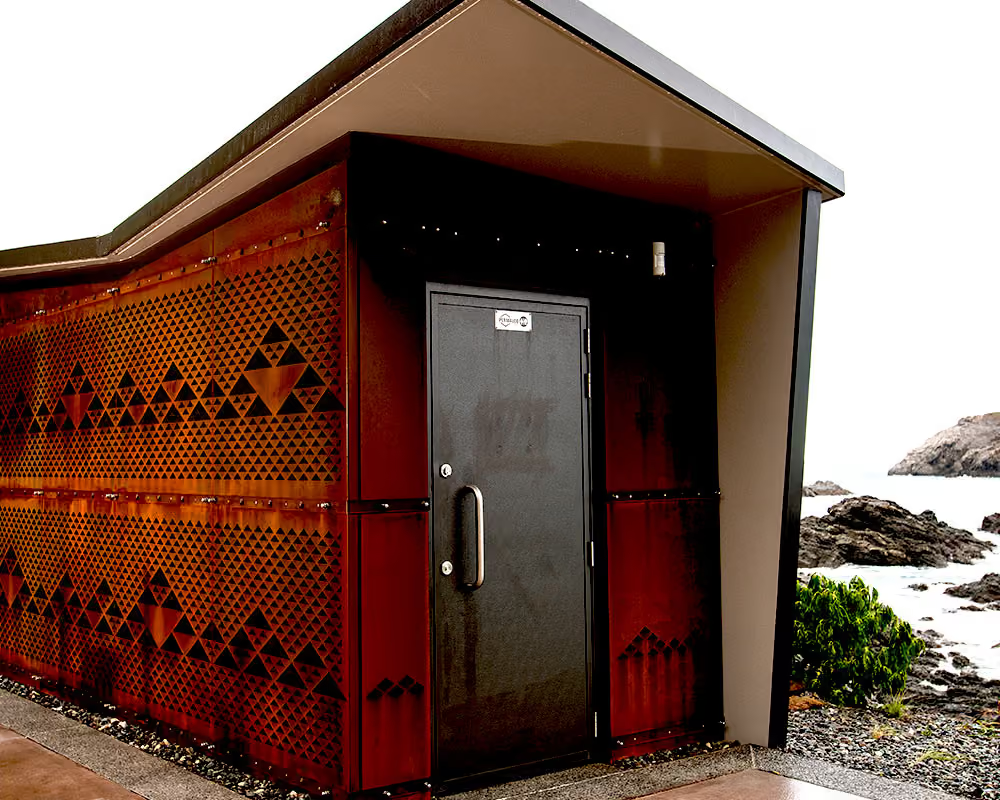
Public toilets might not be everyone's favourite conversation topic, but get a group of council representatives, planners, and industry professionals together, and there's certainly plenty to say.
At our recent industry conferences, including Green Pavlova, APOPO, LGNZ’s SuperLocal and LAPA, we asked attendees a few simple questions about public infrastructure.
What matters most when choosing new public infrastructure? What's the biggest frustration with existing public toilets and storage facilities? And what could we be doing better?
The answers were refreshingly honest, occasionally entertaining, and revealed some interesting themes.
Here's what you told us.
Durability Takes the Top Spot
When it comes to choosing public infrastructure, one priority stood out.
45% of respondents selected durability as one of their most important considerations, making it the most frequently chosen priority.
Value followed at 28%, with cost at 20%.
It's an interesting result, particularly when councils are under increasing pressure to make budgets stretch further.
While upfront cost remains important, the responses suggest that long-term performance carries considerable weight.
And it makes sense.
A public toilet or storage facility isn't something you want to be replacing every few years. It needs to withstand weather, heavy use, and the occasional person determined to test its limits.
Choosing infrastructure that continues to perform over time can make a significant difference to maintenance budgets, asset lifespans, and the communities relying on it.
Cleanliness: Still a Major Frustration
If there was one frustration that kept appearing in the responses, it was cleanliness.
From unpleasant smells and poor hygiene to cleaning frequency and general upkeep, respondents weren't shy about sharing their experiences.
And it's not difficult to understand why.
A public toilet can be beautifully designed and perfectly positioned, but if it's unpleasant to use, none of that matters much.
Cleanliness isn't solely a maintenance issue, either.
The way a facility is designed can make a significant difference to how easily it can be cleaned and maintained. Simple layouts, durable surfaces, accessible fixtures, and fewer hard-to-reach areas all help.
Sometimes, improving public infrastructure isn't about adding more features. It's about making the basics work better.
Vandalism, Damage and the Cost of Constant Repairs
Vandalism was another recurring theme.
Respondents mentioned damaged facilities, expensive repairs, and the frustration of having to replace infrastructure that simply hasn't lasted.
One attendee summed it up particularly well:
"Having to replace them when they get destroyed."
It's a familiar challenge for councils and asset managers.
Public facilities need to accommodate thousands of users, changing weather conditions, and occasionally some fairly rough treatment.
When damage occurs, the impact extends beyond repair costs. Facilities may need to close, contractors need to be arranged, and communities are left without access.
Designing for durability and ease of maintenance from the beginning can help reduce these ongoing headaches.
Beyond the Basics: Can Public Toilets Feel Less Like Public Toilets?
One of the more interesting findings came from the comments about appearance and design.
Not everyone was focused on durability or maintenance.
Some respondents wanted facilities that felt more welcoming, looked better, and fitted naturally into their surroundings.
One particularly memorable response described public toilets as resembling "prison cell toilets."
Not exactly the atmosphere most councils are aiming for.
But it's a fair observation.
Public toilets are functional buildings, yet they're also part of the wider public environment. Their appearance, accessibility, and overall design contribute to how people experience a park, reserve, or recreational space.
There's room for facilities that are both practical and thoughtfully designed.
What Does It All Tell Us?
Perhaps the most interesting takeaway is how closely these priorities are connected.
Durability influences maintenance requirements. Maintenance affects cleanliness. Cleanliness shapes the user experience. And thoughtful design can make a difference across all three.
While every site has different requirements, the feedback suggests that industry professionals are looking for much the same things.
Facilities that last, don't require constant attention, and are pleasant for people to use.
Nothing particularly revolutionary.
But getting all three right isn't always straightforward.
Keep the Conversation Going
These surveys give us a valuable snapshot of the challenges and priorities facing people involved in public infrastructure across New Zealand.
And while the results aren't intended to represent the entire industry, they offer some useful insights from those working with public facilities every day.
We'll continue asking these questions at future events, because understanding what works, what doesn't, and what people want to see improved is an important part of moving the industry forward.
After all, the people planning, managing, and maintaining our public spaces are often the ones with the best ideas about how to make them better.