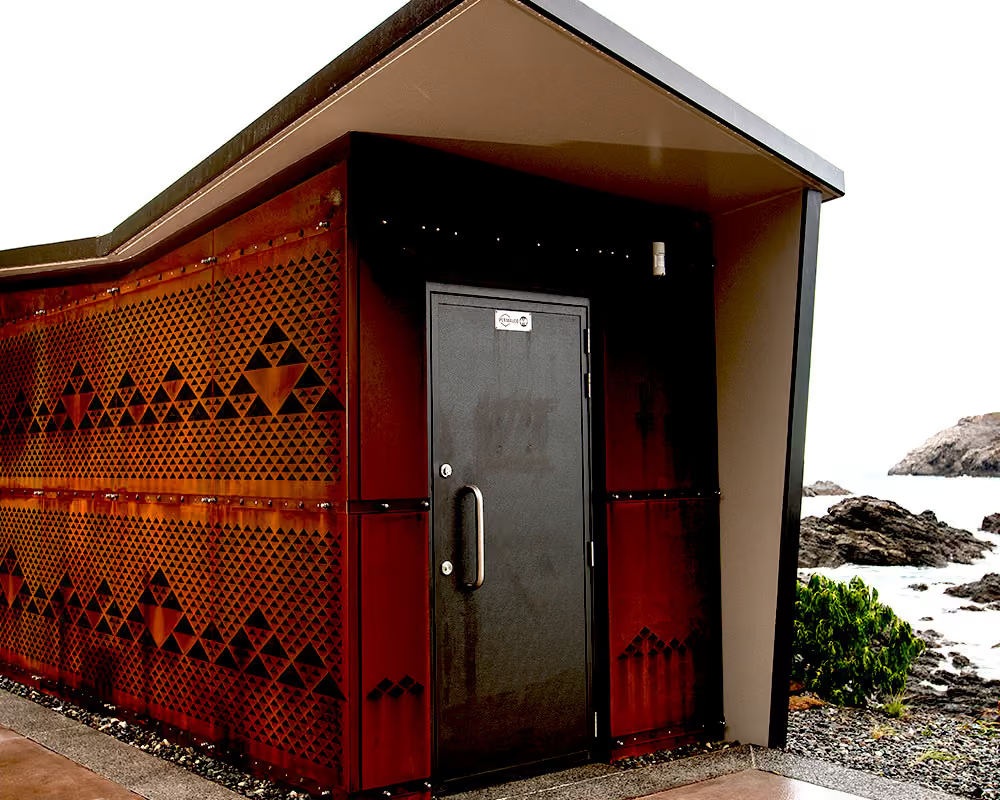
A great public space is about more than its location.
Playgrounds, walking tracks, beaches, and recreation areas all attract people, but it's often the less exciting facilities that determine how long they stay.
Public toilets are a good example. Rarely the main attraction, they're an essential part of making outdoor spaces comfortable, accessible, and enjoyable for everyone.
The Difference Between Visiting and Staying
Think about a family heading to the beach for the afternoon.
The location might be perfect, with safe swimming, plenty of shade, and a great playground nearby. But without accessible public toilets, that afternoon could quickly become a much shorter visit.
The same applies to older visitors, people with disabilities, tourists, and anyone spending extended time outdoors.
Public toilets might seem like a small part of the overall experience, but their presence can influence whether people choose to visit a space, how long they stay, and whether they return.
Accessibility Goes Beyond the Entrance
Providing public toilets is one thing. Making sure they work for the people using them is another.
Accessibility isn't simply about including a wider doorway or an accessible toilet pan. It's about considering the entire experience, from locating the facility to moving through the space comfortably and independently.
For some visitors, access to suitable toilet facilities can determine whether a public space is usable at all.
Features such as accessible layouts, baby changing facilities, appropriate signage, and thoughtful placement help make public spaces more inclusive.
And as communities grow and change, designing for a wider range of users becomes increasingly important.
Location Matters More Than You Think
Even the best public toilet isn't particularly useful if nobody can find it.
Placement within a park or reserve can make a significant difference to how effectively a facility serves its users.
Too far from the main activity areas, and it becomes inconvenient. Too close, and it may interfere with the surrounding environment or recreational space.
Good placement considers pedestrian movement, visibility, accessibility, maintenance access, and how the wider site is used.
It's a balancing act between making facilities easy to reach and ensuring they fit naturally into their surroundings.

The Impact of a Well-Maintained Facility
Public toilets also influence how people perceive a space.
A clean, functional, and well-maintained facility contributes to a positive experience. And we all know that a damaged or poorly maintained one can have the opposite effect.
For councils and asset managers, this makes ongoing maintenance an important part of the visitor experience.
Durable materials, easy-to-clean surfaces, reliable fixtures, and practical layouts all help facilities remain functional and presentable despite heavy use.
It's not necessarily about creating something impressive. It's about providing a facility people feel comfortable using.
Small Facilities, Bigger Benefits
Public toilets support more than individual convenience.
They help make parks accessible to a broader range of people, support local tourism, encourage longer visits, and contribute to the overall usability of community spaces.
In busy recreational areas, they can be just as important as seating, pathways, playgrounds, and parking.
Yet because they're often viewed as purely functional infrastructure, their wider contribution can be overlooked during planning.
Considering public toilets as part of the overall visitor experience, rather than an isolated facility, can lead to better outcomes for the entire space.
Getting the Basics Right
Not every public space needs an elaborate facility.
Sometimes, a simple, well-positioned toilet block is exactly what's required. Other locations may benefit from additional features such as changing rooms, outdoor showers, or specialist accessible facilities.
The important thing is understanding who will use the space, how they'll use it, and what they need to feel comfortable staying.
Because while public toilets might never be the reason someone visits a park, their absence can certainly be the reason they leave.