.jpg)
Vandalism is often treated as an inevitable cost of public infrastructure. Graffiti, damage, and misuse can shorten asset lifespans, increase maintenance budgets, and reduce the sense of safety for the communities using those spaces.
But vandalism isn’t just a behaviour problem. In many cases, it’s a design problem.
Across New Zealand, well-designed public infrastructure is quietly proving that thoughtful design choices can significantly reduce damage, improve safety, and extend the life of public assets.
Designing for Deterrence, Not Reaction
Traditional responses to vandalism tend to focus on repair and replacement. Smarter infrastructure design looks upstream.
When public spaces are designed with durability, visibility, and clear purpose in mind, they naturally discourage misuse. Materials that resist damage, layouts that avoid hidden corners, and structures that feel solid and intentional all contribute to safer environments.
Vandalism thrives where spaces feel neglected or poorly considered. Good design sends the opposite message.
Material Choice Matters
One of the most effective ways to reduce vandalism is through material selection. Robust, non-combustible materials with high impact resistance dramatically limit opportunities for damage.
Concrete performs particularly well in high-use and high-risk environments. It resists fire, impact, corrosion, and weather exposure, making it far less appealing to damage than lighter or more fragile materials. Importantly, it also retains its appearance and function over time, even in demanding locations.
The result is infrastructure that doesn’t just survive vandalism attempts but often deters them altogether.
Visibility and Passive Surveillance
Spaces that feel overlooked are more likely to be targeted. Clear sightlines, open layouts, and thoughtful placement all contribute to passive surveillance – the simple idea that people behave differently when spaces feel visible and well used.
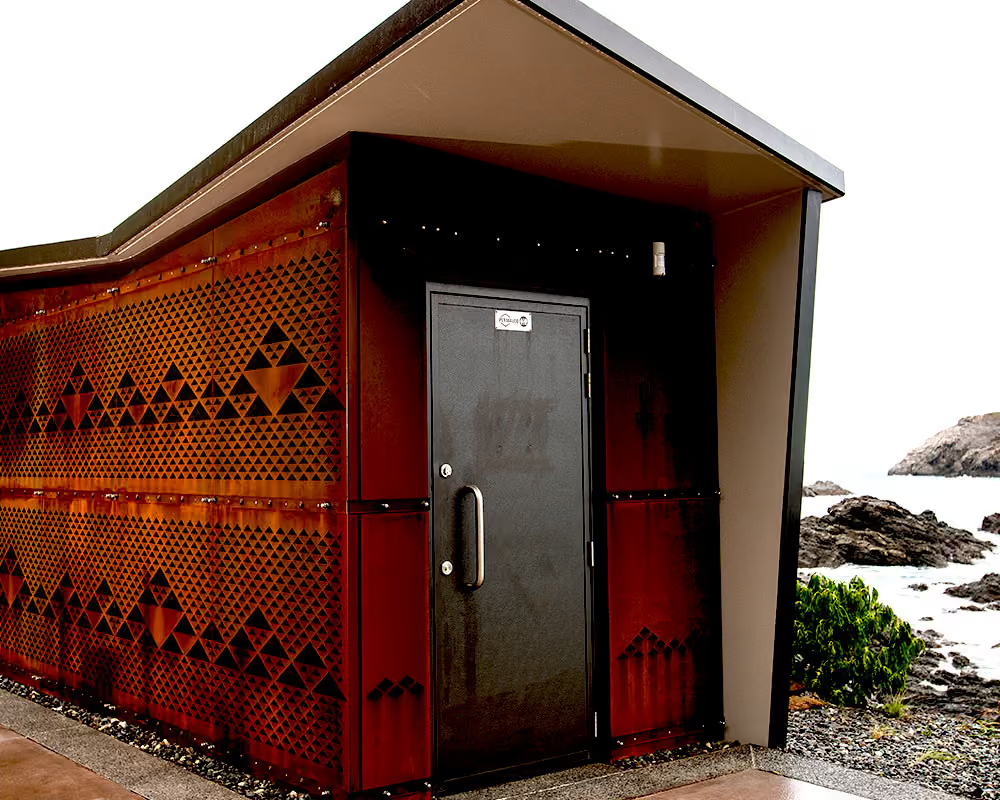
Infrastructure that integrates clean lines, avoids hidden recesses, and encourages legitimate use helps create environments where vandalism is less likely to occur. This is particularly important for public amenities such as toilets, seating areas, and equipment storage, where safety perceptions directly influence use.
Designing for Heavy Use, Not Ideal Use
Public infrastructure must withstand real-world conditions, not ideal scenarios. Designing for heavy, sometimes rough use acknowledges how spaces are actually used and prevents premature failure.
Fixtures that are securely anchored, finishes that don’t show wear easily, and components that can’t be easily removed or damaged all contribute to longer-lasting assets. When infrastructure is clearly built to last, it discourages attempts to test its limits.
.jpeg)
Lower Maintenance, Better Outcomes
Reducing vandalism has a direct flow-on effect: lower maintenance requirements. Infrastructure that remains intact for longer reduces repair cycles, minimises downtime, and lowers whole-of-life costs.
For councils and asset owners, this means fewer reactive maintenance callouts and more predictable budgeting. For communities, it means public spaces that stay functional, welcoming, and safe.
Designing Public Spaces That Endure
At its best, good design doesn’t draw attention to itself. It simply works – quietly, reliably, and over time.
By prioritising durability, smart material selection, and thoughtful layouts, public infrastructure can actively reduce vandalism rather than merely respond to it. The result is safer public spaces, longer-lasting assets, and communities that can rely on infrastructure to do its job without constant intervention.
Smart design doesn’t eliminate vandalism entirely, but it can significantly reduce its impact. And in public spaces across New Zealand, that makes all the difference.
.jpeg)