

.jpeg)
Public infrastructure should not feel temporary.
Yet too often, community facilities are replaced, repaired, or retrofitted far sooner than intended. Weather exposure, heavy use, changing compliance standards, and unexpected growth can quickly expose weaknesses in design or construction decisions.
Future-proofing is not about predicting everything. It’s about designing with longevity, adaptability, and resilience in mind from day one.
Designing for the Environment, Not Just the Site
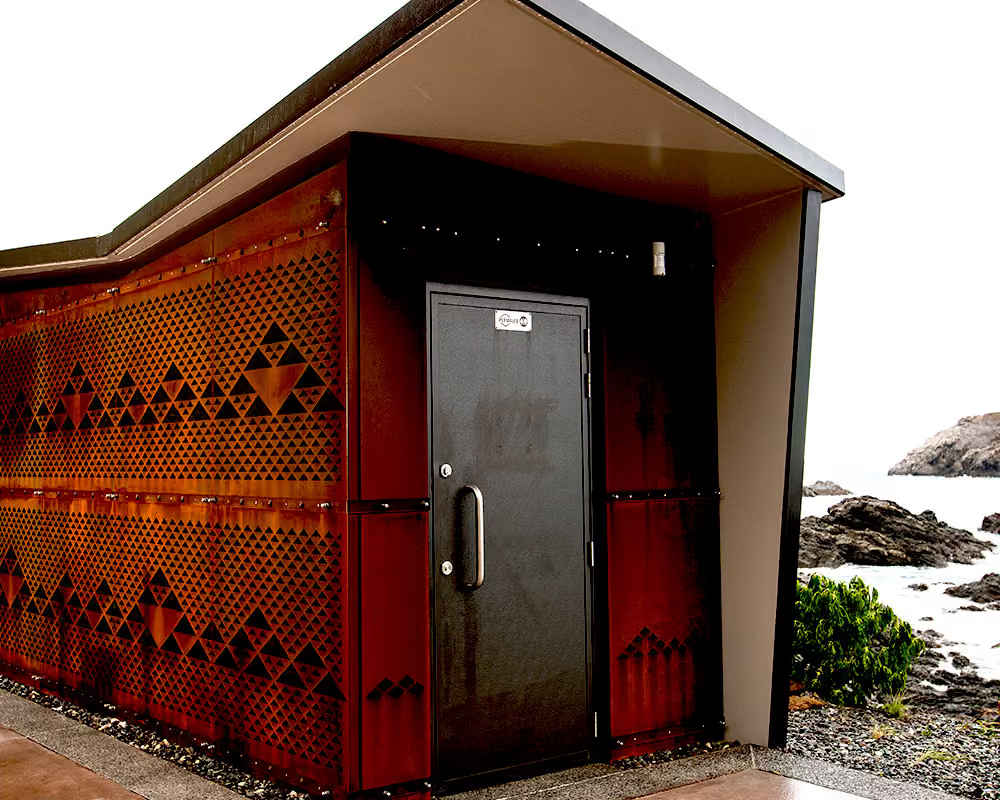
New Zealand presents unique challenges. Coastal salt exposure, high UV levels, heavy rainfall, seismic considerations, and fluctuating temperatures all place pressure on public assets.
Infrastructure designed only for today’s conditions may struggle in five or ten years. Selecting materials and construction methods that can withstand environmental stress reduces long-term risk.
Durable materials, corrosion resistance, and structurally robust designs ensure that infrastructure continues to perform regardless of location.
Planning for Growth and Changing Use
Communities evolve. Visitor numbers increase. Parks expand. Transport hubs become busier. What was once a quiet reserve can become a regional attraction.
Future-proofing means asking:
- Can this facility handle increased foot traffic?
- Is the layout flexible enough to accommodate upgrades?
- Will compliance standards change over the next decade?
- Can components be replaced or upgraded without major reconstruction?
Infrastructure that anticipates growth avoids costly redesigns later.
Minimising Maintenance Over Decades
The true test of infrastructure is not how it looks on opening day. It’s how it performs in year fifteen.
Maintenance budgets are under constant pressure. Designing for low maintenance reduces operational strain and extends asset life.
This includes:
- Choosing materials that resist vandalism and wear
- Avoiding complex fixtures prone to failure
- Ensuring easy access for cleaning and servicing
- Reducing exposed components that may degrade over time
When infrastructure requires minimal intervention, councils can allocate resources more strategically.
Speed of Delivery Without Compromising Longevity
Time pressures are common in public projects. Weather windows, tourism seasons, funding deadlines, and construction scheduling all influence timelines.
Modern prefabrication methods allow for controlled manufacturing environments, improved quality consistency, and reduced on-site disruption. When done properly, prefabrication does not compromise longevity. In many cases, it enhances it.
Shorter site installation times also reduce risk exposure and community disruption.
Building Infrastructure That Quietly Endures
Future-proofing is rarely dramatic. It is deliberate.
It shows up in design decisions that favour durability over trend. In materials selected for resilience rather than appearance alone. In layouts that allow for future adaptation.
Public infrastructure should serve communities for generations, not just funding cycles.
When longevity is prioritised from the beginning, the result is infrastructure that performs reliably, withstands environmental and social pressures, and continues delivering value long after installation.
That is what future-proofing looks like in practice.
.jpeg)
.jpeg)


